The Man Who Was Already There
When people first encounter the Founding Meta-Agers, they believe they have solved the riddle. An Olympian. A world champion. A model. A business leader. A trainer. The mind arranges them into neat categories—achievement, discipline, the visible rewards of a life well lived.
Then they reach Graham.
And they pause.
At first glance, his story appears different. He is not an Olympian. He has never stood on a podium. His face has not adorned magazine covers. He is, by conventional reckoning, an unlikely candidate for a movement built around human potential.
But appearances, as Graham himself would tell you, are precisely the problem.
Graham is thirty-eight years old. He holds a senior leadership position at Chelsea Football Club, managing a team of more than five hundred people—a role that demands strategic intelligence, emotional resilience and the quiet authority of someone who has earned his place. He is, by any measure, accomplished.
Yet when Wayne first encountered him in the gym, Graham carried 170 kilograms on a frame that had long since stopped cooperating. His metabolic age—that unflinching clinical measure of biological wear—registered at seventy-five. At thirty-eight, his body had aged itself into a different generation entirely.
Today, he weighs 112 kilograms. His body composition has transformed. His health markers have improved significantly. The numbers tell a story of redemption, of will exerted over matter.
But those numbers do not explain why Graham became a Meta-Ager.
The answer lies elsewhere.
Wayne first noticed Graham years ago as a fellow gym member. Over time, casual conversations developed into a friendship. What stood out was not Graham’s size, his job title, or even his fitness goals.
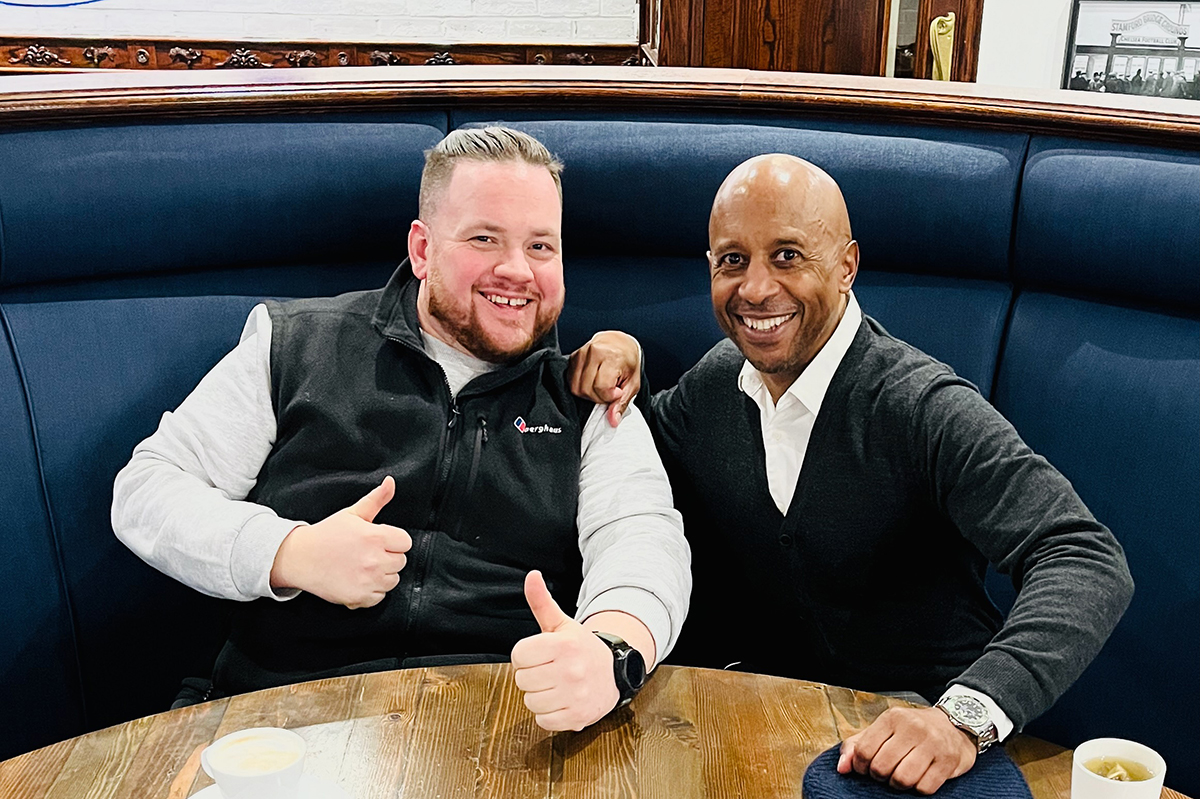
It was his willingness to listen.
Not in the polite, performative way people often listen while waiting for their turn to speak. Not with the distracted attention of someone already formulating a response. But in the way that precedes action. The kind of listening that files information away, takes root and eventually transforms into behaviour.
Over nearly five decades of training, Wayne has met countless people who wanted to change. He has heard their declarations, witnessed their enthusiasm and watched them invest in memberships, programmes and plans. They speak passionately about their goals.
And then, almost without exception, they stop.
Not because they lacked desire.
Because they lacked something deeper.
Few follow through.
Graham was different.
One day, after discussing his fitness goals, Wayne told him:
“Now that you’ve revealed your fitness goal to me, you’re accountable to me.”
Graham smiled and replied:
“No problem.”
A simple exchange. The kind most people forget by the next sunrise.
But accountability only works when someone is willing to embrace it. And Graham, it turned out, was willing.
Years later, Graham still updates Wayne on his progress without being asked. Training. Setbacks. Milestones. Lessons learned. They are openly shared—not from obligation, but because accountability has become part of who he is.
As Graham puts it:
“Accountability is my compass. There are no excuses, no shifting of blame and no sugar-coating reality. The mirror doesn’t lie, and neither do our daily habits.”
That consistency of behaviour is what defines him. Not his job title. Not his starting weight. Not his finishing weight. The unbroken thread of showing up, again and again, when no one was watching.
His transformation did not happen because he discovered a secret programme or a magical source of motivation. It happened because he repeatedly chose to show up. Again and again. When progress was visible. When progress was slow. When life became difficult. When old habits tried to return.
Looking back, Graham believes one of the biggest misconceptions people have about transformation is that there is a finish line. People imagine they will eventually arrive at a destination where they can return to normal.
He sees it differently.
“True transformation is a permanent shift in identity.”
That sentence could almost serve as a definition of the Meta-Ager mindset.
The story really began years earlier, when Graham walked into a local gym hoping to join. The manager reviewed his metrics and delivered a blunt assessment.
“You can’t join. You’re a walking heart attack risk.”
For many people, that would have been a humiliating moment.
For Graham, it became a turning point.
The issue was no longer appearance. It was survival.
Like many people, Graham experienced periods where emotional struggles became physical struggles. Poor choices became habits. Habits became declining health. The cycle became familiar—a gravitational pull towards comfort, towards ease, towards the path of least resistance.
But eventually he arrived at a powerful realisation. One that would define everything that followed.
No matter what happened around him, his health remained the one thing that gave him the ability to fight back. Jobs could change. Money could come and go. Relationships could evolve. Life could become unpredictable in ways that defied preparation.
Health remained the foundation from which everything else could be rebuilt.
Today, Graham describes healthy longevity as ensuring that his healthspan matches his lifespan. Not merely living longer, but maintaining the physical autonomy, mental sharpness and resilience to continue living life on his own terms.
He refuses to become a bystander in his own existence.
That insight became central to his philosophy. It is the philosophy that makes him a Meta-Ager.
As Graham puts it:
“If everything disappeared tomorrow, I would still have my mindset, my resilience and the internal architecture I built to completely reshape my life.”
For Wayne, that statement explains everything.
It is the key that unlocks Graham’s place within Meta-Age. Not because he lost fifty-eight kilograms. Not because his metabolic age improved. Not because he transformed his appearance.
Because he transformed his behaviour.
In fact, Wayne often says that Graham was a Meta-Ager long before the weight came off. His body simply caught up with his behaviour. The physical transformation was not the achievement. It was the evidence. The lagging indicator of an identity that had already shifted.
Today, his focus has expanded beyond himself. He talks about legacy. About passing these lessons on to his children. About teaching discipline, resilience and self-respect not through lectures, but through example.
His advice to his younger self reflects that same hard-earned wisdom:
“You are the literal sum of the five people you spend the most time with. Choose your circle with absolute precision. And never forget: time is the one currency you can never earn back.”
That is why Graham sits comfortably alongside Olympians, champions, business leaders and media personalities within the Meta-Age movement.
The founders do not share the same age. They do not share the same profession. They do not share the same life story. They do not share the same starting point or the same struggles.
What they share is a commitment to taking responsibility for their future health. A refusal to outsource their wellbeing to circumstance. An understanding that health is not the reward for having your life together—it is the foundation that helps you put your life together when things fall apart.
That is the Meta-Ager identity.
And Graham embodies it every day.