
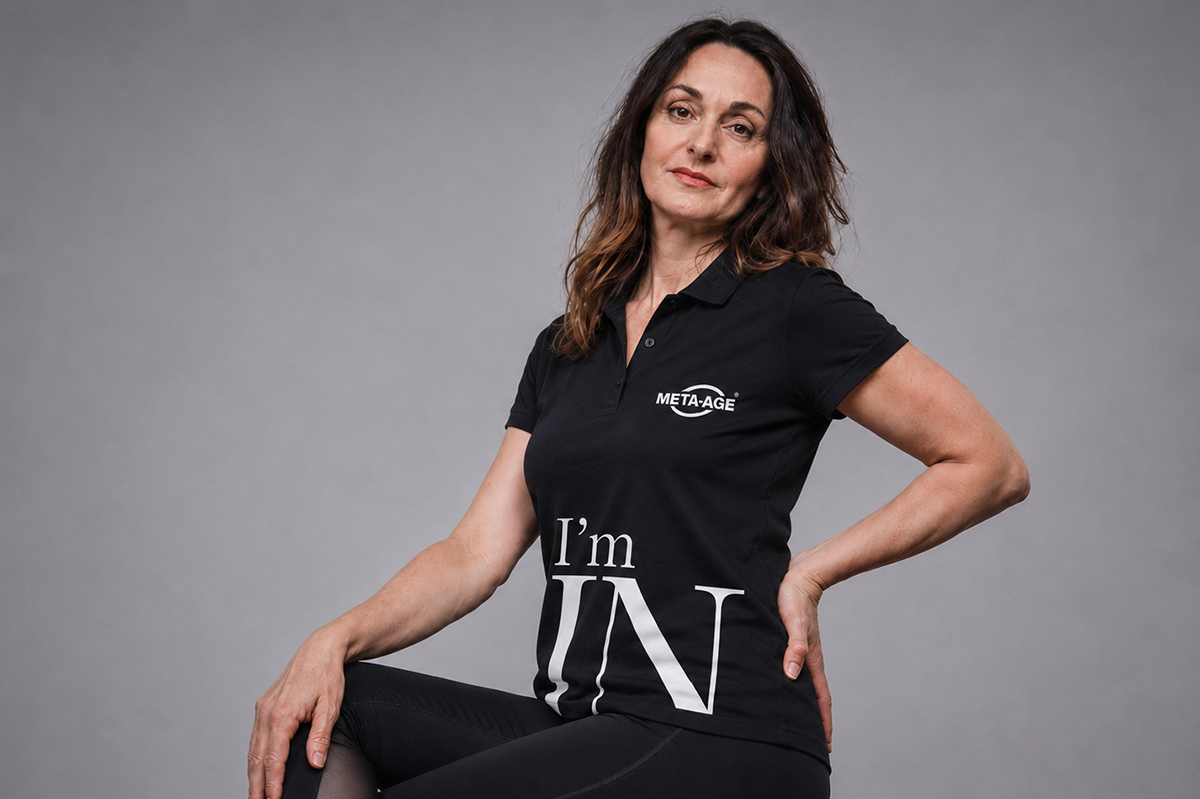
The META-AGER
Meta-Age is the identity of those who choose participation over withdrawal.
A Meta-Ager is someone who chooses participation over withdrawal.
Ageing is inevitable. Withdrawal is not.
For decades, culture created identity stages for youth. Then somewhere around midlife, the story changed. People were expected to become quieter, less visible, less ambitious. Entire industries conditioned people to accept decline as maturity.
Meta-Age rejects that completely.
Most healthy ageing advice focuses on diet, exercise, and medical markers. Those things matter. But Meta-Age begins with a different question:
Are you participating or withdrawing?
The Meta-Ager is not trying to be twenty-five again. They are not chasing youth. They are choosing presence.
They still care how they move, how they dress, how they look, and how they carry themselves. Caring about these things is not vanity. It is self-respect.
The goal is not to fight age. The goal is to remain engaged with life as time moves forward.
Most people do not consciously choose withdrawal. It often arrives quietly through injury, loss, reduced energy, changing responsibilities, or the gradual narrowing of life’s opportunities. What begins as adaptation can slowly become disengagement. Most people never notice the moment it starts.
The Meta-Ager notices.
Not because they are special.
Because they pause long enough to ask:
Where am I heading?
That question sits at the heart of the Meta-Age philosophy.
Meta-Age is built on principles, habits, accountability, movement, and lifelong learning. Not perfection. Not extremes. Just the understanding that behaviour compounds, and that every day we move in one of two directions: towards greater participation or greater withdrawal.
Meta-Age grew from a finding popularised by the Mayo Clinic that only a small percentage of people consistently meet key health markers. We use that idea not as a verdict, but as a challenge.
What changed?
What drifted?
Are you moving forward, standing still, or drifting away from the person you want to become?
The Meta-Ager chooses participation.
They move, learn, adapt, contribute, recover, connect, and continue growing. Not because life becomes easier with age, but because participation matters.
The Meta-Ager does not disappear with age.
They evolve.
You do not join. You become.